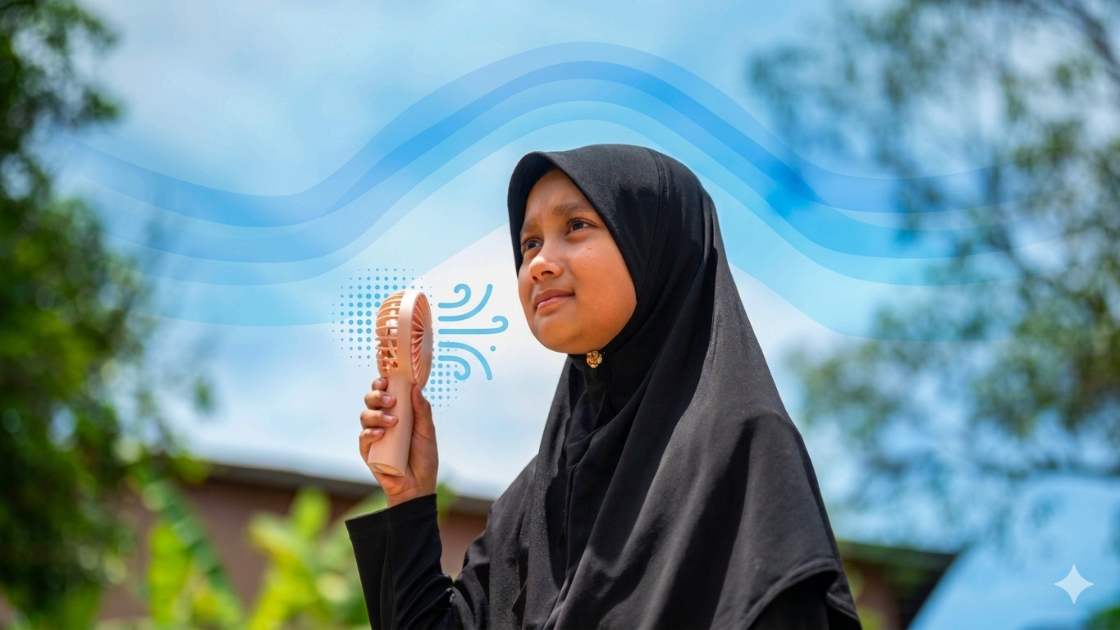
If you feel like Malaysia’s crazy weather has been testing your patience lately, you’re not being dramatic – and you’re definitely not alone.
Most days start scorching by 8am. By evening, kaboom – thunder cracks so loud it rattles your windows and lightning that has everyone pausing Netflix at the same time.
For a short moment you think, “Okay, maybe this is going to help cool things down”. Only it doesn’t.
This Earth Day, it’s hard to talk about anything without coming back to Malaysia’s crazy weather. It’s affecting sleep, focus and mood and how we get through our daily lives.
When Malaysia’s crazy weather turns daily life into an endurance test
Let’s count the moments:
-
- Can’t sleep properly because nights are hot
- Schools feeling like ovens by noon
- The air sometimes looking… suspiciously hazy
- Stormy evenings that turn LRT/MRT rides and traffic into pure chaos.
And somehow, we’re expected to just deal with it. Drink more water. Sit nearer the fan. Carry an umbrella everywhere. Accept your fate. Tahan a bit more.
Even when it rains, it doesn’t really help. The storm cools things down briefly, then the heat creeps back and the humidity goes wild. Sometimes haze and pollution sneak in too, making moving and breathing harder than they should be.
And when heat, pollution and humidity start affecting how we study, focus, move and breathe, that’s not “normal weather” anymore. That’s our environment waving a giant red flag.
This isn’t just drama – even the numbers say so
If Malaysia’s crazy weather feels relentless, it’s because for many children and young people, it already is.
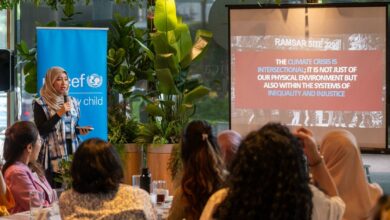
In a recent Op‑Ed, Nasha Lee, Climate and Environment Specialist at UNICEF Malaysia, shared that children are amongst the most exposed to extreme heat and poor air quality. Not occasionally but as part of daily life.
When classrooms overheat, when outdoor play becomes risky, when breathing feels harder, learning and wellbeing take the hit first.
So far this year, the Ministry of Health has reported heat‑related cases across Malaysia. In Kedah alone, 206 schools were forced to close after Level 2 heatwave conditions. As of mid April, seven areas in Peninsular Malaysia remain under Level 1 heat alert – despite the thunderstorms in some parts of the country.
UNICEF’s data shows Malaysia now experiences around eight heatwaves a year. That’s about four times more than in the 1960s. Today, more than 1.16 million children in Malaysia are highly exposed to heatwaves.
So yeah, Malaysia’s crazy weather is putting pressure on everyday life – especially for children and young people who don’t get to simply “opt out”.
So… what should governments and industries actually do?
Let’s be real: vibes don’t cool classrooms. Action does.
Here’s what protection should look like in real life:
1. Stop pumping money into things that make heat worse!
Phase out fossil fuel subsidies and reinvest that money into cleaner energy that actually cools schools, homes and public transport.
2. Design for a hot country (because we are one)
Better ventilation, smarter cooling and buildings that don’t trap heat like its a favourite hobby.
3. Bring green back into cities
Protect urban “green lungs” – trees, pocket parks and shaded corridors – instead of clearing them for more concrete that turns neighbourhoods into heat traps.
4. Protect forests like lives depend on it
Because they do. Once forests and wetlands are gone, the heat doesn’t wait politely. Supporting Indigenous land rights is also one of the most effective ways to prevent deforestation and keep the country cooler.
5. Make polluting choices harder to ignore
When pollution costs more and cleaner options cost less, industries move faster – without asking young people to “sacrifice” their comfort and health.
This isn’t about being “extra”. It’s about basic protection, dignity and health.
Because Malaysia’s crazy weather – heat, thunderstorms, haze and all – isn’t waiting for us to catch up.
YELL Conservocation Internship
If you’re reading this and thinking, “okay but what can I actually do?” – fair.
One option is YELL (Youth Environment Living Labs), where young people in Malaysia learn, question and work on environmental issues together.
Their Conservocation programme is a 6‑month paid internship, placing 26 young people with environmental organizations across Malaysia. Applications close 30 April 2026. Apply here!
You don’t need to be perfect. Just curious, brave enough to ask questions, and ready to show up.
Because if Malaysia’s crazy weather is becoming part of everyday life, then protecting young people needs to become everyday too.
READ >> A Youth Guide to beating the heatwaves in Malaysia