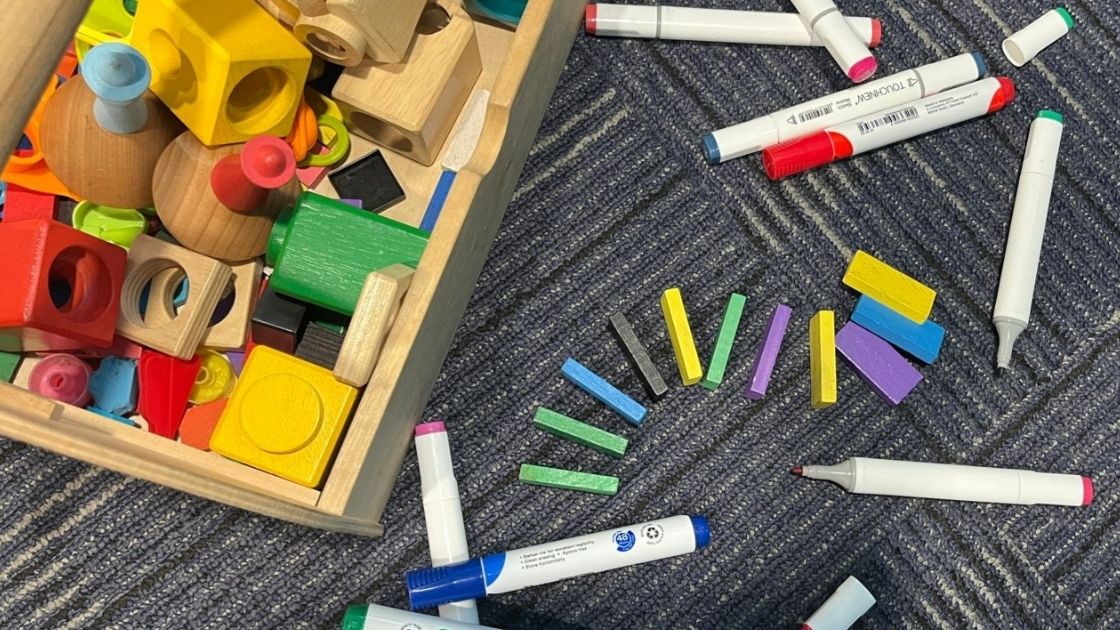
I first noticed it in the little things. The way my four-year old brother would line up his toys for hours, lost in his own world. Sudden, loud noises shattered him. He could go from boundless energy to silent retreat in minutes. At that time, I didn’t know it, but these were early signs of my brother’s autism and ADHD.
While others saw a “spirited” or “lively” boy, I saw a pattern. A mind that worked differently, beautifully, and sometimes, challengingly. I saw my little brother, my adik.
Hitting the wall of denial
“Boys will be boys,” they said.
“He’ll grow out of it,” they said.
“He’s just a little behind, don’t worry.”
“They” were my parents, the two people who loved him most in this world. And their denial wasn’t born from neglect. It came from deep, protective love and fear. In our Malaysian community, labels like “autism” and “ADHD” carry heavy stigma, misunderstanding, and a thousand unsaid worries about a child’s future.
Trying to talk about it felt like speaking to a wall built out of love. “Don’t say that about your brother, kakak,” my mum would say, her voice tight with worry. “There’s nothing wrong with him, he’s just a boy.” My dad would quietly change the subject.
Every article I shared, every gentle observation I made, was deflected. To be honest, it was one of the loneliest feelings. It was as if I could see truth so clearly, yet unable to help the people I love see it too.
For three years, as a kakak, I watched my adik struggle in a world not designed for him, while my parents struggled with a truth they weren’t ready to face.
The turning point at school
Then one day, the crisis came in primary school. Complaints from teachers piled up:
“He can’t sit still,”
“He doesn’t follow instructions,”
“He seems to be in his own world.”
My adik couldn’t connect with friends. Over time, the happy, energetic boy we saw at home became anxious and frustrated at school.
The school reports were the wake-up call. It was no longer just my observation; it was a consensus from the outside world. Gradually, my parents’ fear began to shift. It was no longer a fear of a label, but fear of him falling behind, of him being unhappy.
The journey to a professional was quiet and heavy. At age seven, after a series of assessments, the psychologist confirmed a dual diagnosis of minor Autism Spectrum Disorder and ADHD. She called it a “late diagnosis.”
I remember the silence in the car ride home. It wasn’t defeat, but absorption. The word was finally out in the open, no longer a ghost, but something we could finally understand.
Learning to accept my brother’s autism and ADHD
Acceptance didn’t happen overnight. It was a slow, gradual sunrise.
It started when my mum started secretly reading articles I left on the kitchen table. Soon after, my dad began asking quiet questions, like, “So this ‘hyperfocus’… is that why he can play with his LEGOs for hours?”
The shift started with our language.
“Why can’t you just behave?” changed to “What do you need to feel calm right now?”
From “Stop being so difficult!” to “I see that this is hard for you.”
Rather than trying to change him, we started learning his language. We created quiet spaces for him at home, and learned that his “obsessions” were passions. And we leaned into them to connect with him.
Today, my adik is eight. The journey is far from over, but we’re walking it together.
He is the same brilliant, funny, and unique boy he always was. The difference is that now, we are learning how to support him, not change him. Understanding my brother’s autism and ADHD has made me more patient, empathetic, and proud of who he is.
A note to my adik and others like him
“And that’s how kakak shows that I love you, adik.”
If you have a sibling like mine, remember, it’s Ok not to understand everything at first. What matters is that we try, and that we never stop learning how to love better.
READ >> See the child, not the disability